An Ode to Emma Stone, Easy A

  • Subscribe to our RSS feed.
  • Twitter
  • StumbleUpon
  • Reddit
  • Facebook
  • Digg

Monday, 31 December 2012

Poem(s) for the New Year: DH Lawrence's New Year's Tryst

Posted on 11:35 by Unknown

NewImage

D.H. Lawrence, now mostly remembered for Lady Chatterley's Lover and the censorship trial that followed, also had a stellar career in poetry (which many regard as superior to any of his novels). They possess an animal vibrance that stands in sharp contrast to his more cerebral contempories (T.S. Eliot's Love Song of J. Alfred Prufrock was published in the same year, 1917).

One can easily imagine that the narrator of the two poems below would not only dare to eat a peach, he would eat it off his lover's body and spit it in the face of his enemies. Kick off your new year with a little bit of passion. Enjoy!

"New Year's Eve" by D.H. Lawrence

There are only two things now,
The great black night scooped out
And this fire-glow.

This fire-glow, the core,
And we the two ripe pips
That are held in store.

Listen, the darkness rings
As it circulates round our fire.
Take off your things.

Your shoulders, your bruised throat!
Your breasts, your nakedness!
This fiery coat!

As the darkness flickers and dips,
As the firelight falls and leaps
From your feet to your lips!

"New Year's Night" by D.H. Lawrence

Now you are mine, to-night at last I say it;
You’re a dove I have bought for sacrifice,
And to-night I slay it.

Here in my arms my naked sacrifice!
Death, do you hear, in my arms I am bringing
My offering, bought at great price.

She’s a silvery dove worth more than all I’ve got.
Now I offer her up to the ancient, inexorable God,
Who knows me not.

Look, she’s a wonderful dove, without blemish or spot!
I sacrifice all in her, my last of the world,
Pride, strength, all the lot.

All, all on the altar! And death swooping down
Like a falcon. ’Tis God has taken the victim;
I have won my renown.

Read More
Posted in Books, Poetry | No comments

Thursday, 27 December 2012

Oscarbait 2012: Les Miserables

Posted on 20:21 by Unknown

NewImage

Every review I've read of Les Miserables compares it to the musical that birthed it, which feels slightly like comparing Texas to Louisiana without any mention of the rest of the United States, let alone the world. So I'm gonna be the nerd who talks about the book, which only seems fair since, at the end of the day, the movie is a translation to a new medium, just as the musical was a translation from a novel, which in turn was translated and mistranslated from the original French.

What we're seeing on screen, ultimately, is the videotape of the videotape of the videotape. They've taken the original text and carved it up into strangely shaped pieces, excising character and context and leaving in the glossy bits. This approach worked fine for Mamma Mia (disagree in the comments) because at least Mamma Mia was a fun romp. Oscarbait Les Miserables is a series of soul-destroying set-pieces grounded in not even an iota of human agency.

It finds a humanity with its side characters (Thenardiers, Enjolras, many other nameless revolutionaries) that it never matches with the leads. There goes Anne Hathaway's snotty nostril, there goes the ever-pinkening bags under Hugh Jackman's eyes, and Cosette? Oh Cosette. I never knew you (though I knew you so well in the novel).

What frustrates me most is how little this film paid attention to the prime rule of film - economy in storytelling. Now, economy doesn't simply mean cutting out portions of the text, it means that you boil the story down to the essentials.

Character Slaughter

NewImage

At the end of the film, here's what I'd have thought of the characters if I hadn't read the novel:

1. Jean Valjean is a Panglossian do-gooder whose relentless commitment to "morality" has no foundation in reality (which couldn't be further from his character in the novel, who's deeply conflicted at all turns. If you remember, when Jean Valjean goes to the battlements, he's undecided whether to save Marius or to kill him).

2. Marius is the shallowest romantic on the planet (this hurts, because Novel Marius was my first great love, the literary reflection of my idealistic/suffering 12-year old self). Seriously, what a wet wanker is FilmMusical!Marius.

3. Cosette? WHAT COSETTE? All I see is an OBJECT who is barely even half of a person (In the novel, she gets her own book for a reason. She's the optimistic striver who is tired of being an object, and makes choices. CHOICES). This hurts even more because Amanda Seyfried sounded TERRIFIC. Couldn't you give her a role, you guys?

Les Miserables as a Film

There's plenty of commentary elsewhere on Les Miserables filmic failures (oh those closeups. What really burns me is that Tom Hooper actually had multiple cameras on each actor, AND STILL CHOSE THESE DAMNED CLOSEUPS. Like, "Guys, forget the plot. What we really need now is an establishing shot of Eddie Redmayne's nasal freckles.").

Guys, this burns me to say. I really looked forward to the movie, and am sad that it isn't something I can rewatch over and over. But quite frankly, by the time we hit Valjean's seventh song, I was ready for him to die, and die swiftly (and don't get me started on Russell Crowe's "singing").

I've seen the musical, and I don't remember it being such an poorly thought out adaptation of the novel. But perhaps this is a reflection of the rule of Chicago - you can't just film the damn stage musical, you have to alter it to fit the new medium.

Oncoming Hope out. Play nicely in the comments.

Read More
Posted in 2012, Movies, Oscarbait 2012 | No comments

Monday, 24 December 2012

Charles Dickens' Christmas Drinks

Posted on 14:50 by Unknown

NewImage

This Christmas, we wanted to add some literary spice to your drinking.

Part of what made Dickens's work come so vividly to life was his attention to small details in small lives. This Christmas, you too can drink like Scrooge and Cratchit.

1. "Charles Dickens's Own Punch"

The man himself wrote the instructions for his eponymous punch in an 1847 letter to one "Mrs. F." (aka Amelia Austin Filloneau):

Peel into a very common basin (which may be broken in case of accident, without damage to the owner's peace or pocket) the rinds of three lemons, cut very thin and with as little as possible of the white coating between the peel and the fruit, attached. Add a double handful of lump sugar (good measure), a pint of good old rum, and a large wine-glass of good old brandy; if it be not a large claret glass, say two.

Set this on fire, by filling a warm silver spoon with the spirit, lighting the contents at a wax taper, and pouring them gently in. Let it burn three or four minutes at least, stirring it from time to time. Then extinguish it by covering the basin with a tray, which will immediately put out the flame. Then squeeze in the juice of the three lemons, and add a quart of boiling water. Stir the whole well, cover it up for five minutes, and stir again.

This would be the punch that young David Copperfield offers Mr. Micawber:

“But punch, my dear Copperfield,” said Mr. Micawber, tasting it, “like time and tide, waits for no man. Ah! it is at the present moment in high flavour.” (Chapter XXVIII - Mr. Micawber's Gauntlet)

2. "Smoking Bishop"

"A merry Christmas, Bob!" said Scrooge, with an earnestness that could not be mistaken, as he clapped him on the back. "A merrier Christmas, Bob, my good fellow, than I have given you, for many a year! I'll raise your salary, and endeavour to assist your struggling family, and we will discuss your affairs this very afternoon, over a Christmas bowl of smoking bishop, Bob!" (A Christmas Carol)

Smoking bishop was not actually a Dickensian creation. It was a popular tavern drink, which Dr. Johnson defines as "a cant word for a mixture of wine, oranges and sugar." I'd give you the recipe but there's a variety on the web, from Jonathan Swift to Dickens' own father.

3. "Negus"

"Mr. Feeder, after imbibing several custard cups of negus, began to enjoy himself." (Dombey and Son)

Negus might be found all over English literature (Jane Eyre drinks it when she heads to Thornfield Hall, it features at a Mansfield Park party, and it's ALL OVER Dickens).

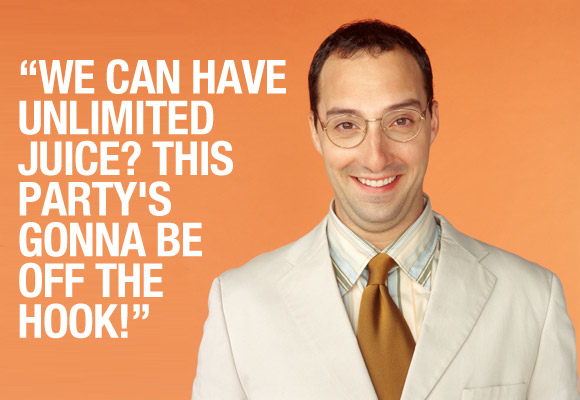
But the definitive version comes from Mrs. Beeton herself, who describes it as "a beverage usually drunk at children's parties." If that were the case today, I imagine children's parties would look a hell of a lot like Buster Bluth on grape juice:

NewImage

Let's just say, the drink's not exactly virgin. Per Mrs. Beeton:

INGREDIENTS: To every pint of port wine, allow 1 quart of boiling water, ¼ lb of sugar, 1 lemon and grated nutmeg to taste.

DIRECTIONS: Put the wine into a jug, rub some lumps of sugar (equal to ¼ lb) on the lemon rind until all the yellow part of the skin is absorbed, then squeeze the juice and strain it. Add the sugar and lemon-juice to the port wine with the grated nutmeg; pour over it the boiling water, cover the jug, and, when the beverage has cooled a little, it will be fit for use.

Enjoy your Dickensian drinks, and a happy holiday to all!

Read More
Posted in Books, Daily Inspiration, Feature | No comments

Tuesday, 18 December 2012

Music Video of the Day: Free Winona!

Posted on 09:10 by Unknown

NewImage

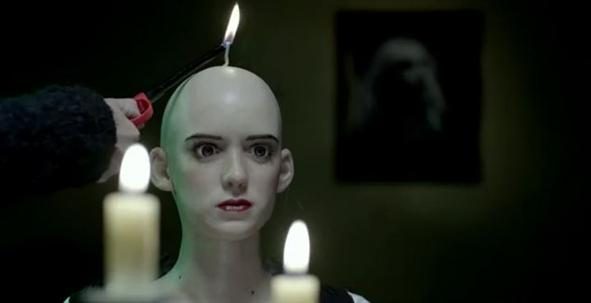
The song may be balls, but watching Craig Roberts perv out over a deanimated Winona Roberts is more than a little mesmerizing.

In The Killers' "Here With Me," Winona Ryder's actress character slides in and out of doll-hood, a prisoner of one young man's Pygmalion-esque fantasy. You may have seen Craig Robert's remarkable performance in Submarine (if not, get thee to your Netflix queue), as an overeducated teenager in 1970s Wales.

If only the song were half as interesting. Watch it anyway:

Read More
Posted in Music Video, Winona Ryder | No comments

Sunday, 16 December 2012

The Worst Movie Review Ever, or, Fire This Reporter Now

Posted on 09:00 by Unknown

NewImage

Yesterday, the once venerable Guardian published an execrable pile of garbage entitled "Will America be able to stomach the Les Misérables film", by a hack named Hannah Betts (a list of her credits include other such useful commentary as "Why I'm happy to wear fur," and "Feminism and flirtation are by no means unlikely bedfellows").

In a piece that even 13 year old bloggers would be ashamed to write, Betts tags her piece: "The new Les Mis film plays down the bromance and plays up the pox, boils and bad European teeth."

God forbid a socio-realist novel about French poverty attempt to look somewhat authentic!

But it gets worse:

I'm not sure how it's going to play in the US, though. For a start, the bromance is subdued for a nation that brought us Top Gun's bros riding bros' tails.

Moreover, the various poxes, STDs, boils and not just British but also French teeth are likely to inspire hysteria in the neurotically sanitised US of A. And this before the male leads spend several scenes literally covered in shit. Still, it will serve to confirm everything Yanks feel about contemporary Europe.

Has Ms. Betts been lying in a coma since 1984? Are there no movies between Top Gun and Les Miserables? And who the hell think there's a bromance between Javert and Valjean?

Finally, what does this film have to do with what Yanks may or may not feel about contemporary Europe? The only thing this article serves to confirm is that Hannah Betts should be banned from the printed word. The Guardian should be ashamed of itself for allowing such tripe to bear its name.

As a side note, the Guardian appears to have some sort of vendetta against Les Miserables, running a "trailer review" that perfectly complements Ms. Betts in wretchedness and sour grapes. It's not even worth quoting, given that Stuart Heritage appears to never have heard of the book, the musical or Victor Hugo before being paid, somehow, to write a bit of unfunny nonsense.

Read More
Posted in Anne Hathaway, Media, Review | No comments

Sunday, 9 December 2012

Videogame Company Fights the Diversity Fight

Posted on 07:27 by Unknown

NewImage

Life-affirming pleasures often come from the strangest places: in this case, Gaslamp Games' blog on a new project based on the Victorian era:

We feel it’s important to have people of all colours in the game, basically. I’m not going to get into the exceedingly grim history of 19th century colonialism here, but I assure you we’ve had a lot of internal discussions about how we can possibly approach making a game vaguely based on the Victorian era without being ridiculously offensive.

I've written elsewhere about how writers seem to choose to set their work in certain eras because they want to pretend there was a world before integration, where white men could be white men and society celebrated even their worst excesses. But as David Baumgart points out, that world NEVER EXISTED. It's heartening to hear Gaslamp engage with the issue, even though I have no doubt that the outcomes won't be perfect.

I've only recently began to engage with the politics of the video game world. To tell the truth, until I played Half Life 2, I had no idea there was a place for lead characters who aren't white male jocks. I recall years of playing Goldeneye as Natalya, the only character in any video game who felt in any way relevant to me (and she's still white, so really not that relevant), given that she looked like an actual scientist and not, let's say, Lara Croft (or Mileena/Kitana, or Chun Li, etc).

Happily, this ignorance allowed me to enjoy years of games like Zelda 64, which are almost completely intolerable when looked at through any kind of feminist lens (look at all the women who exist only to coo at Link or be rescued from their fates!).

But I'm glad to see a new world where developers are actually thinking through how world-building impacts audiences who play their games. Would you really want to spend 40-60 hours in a world where no one looks like you? Why would you spend that kind of time in a world that explicitly gives zero thought to you? In this day and age, those are safe spaces for the writers to exercise their own privilege, where they don't have to engage with messy issues like gender and race.

Read More
Posted in Feminism, Gender, Race, Videogames | No comments

Wednesday, 28 November 2012

The SNL Sketch that Ate Homeland

Posted on 21:04 by Unknown

NewImage

I've never taken the time to write about a Saturday Night Live sketch. Commenting about parody seems like an exercise in preposterous meta-analysis. But reader, I cannot lie. SNL's Homeland spoof has pretty much ruined the show for me.

It's possible that the sketch just happened to coincide with a downturn in the show's believability and quality, but with every passing episode, the parody forces me to question whether the show was ever that good.

Few would ever have described the show as a soap opera, but as the sketch perfectly conveyed, maybe that's what Homeland is, and if not, it's certainly heading that direction, as it spends more and more time on Brody and Carrie's "romance" ("It's ok! It doesn't have to make sense! She's bipolar"). As a soap opera, it utterly fails, covering up its inability to craft convincing relationships in cloaks and daggers.

Anigif enhanced buzz 18944 1352647820 4

In season one, the relationship between Brody and Carrie made a most peculiar sense, as it was entirely premised on discovery. But now there's at least one scene a week which conveys how strongly Carrie wants Brody to leave his family, of how she's willing to compromise missions to save him, of how her love saves him from the edge (lately, we're getting all three of these in every episode).

This has the double effect of reducing the stakes of the ongoing terror plot (it's ok! Love will save us all!) and of infantilizing the moral questions that plague Brody.

***SPOILER FOR LATEST EPISODE***

I'm especially concerned after the twist reveal that Estes ordered Quinn to murder Brody after they stopped the terror plot. The preview indicated that Saul would resolve the issue with thoughtful machinations, but I predict a mess of hysteria and chin-quivering.

If Homeland dials up the emotions to 11 in every single episode, it risks distracting the viewer from what actually made it interesting - how circumstances warp our ideas of morality, and how that mutation affects not just our own lives, but the lives of those around us.

Read More
Posted in | No comments

Sunday, 25 November 2012

Skyfall's Troubling Gender Politics

Posted on 08:32 by Unknown

NewImage

There's no way to discuss this without talking about the ending. In other words, HERE THERE BE SPOILERS.

Let me start by saying that I loved Skyfall. I can comfortably state that it's one of the top two Bond films (I'm unable to declare it better than Goldeneye without seeing that old favorite again). Skyfall finds the perfect balance between acknowledging the tropes that make Bond such a treasured film commodity and acknowledging their quaintness.

But the problem, as the film so ably points out, is that Bond (and the whole of MI6) can't be judged by its activity in the past, but must be judged by the needs of the present. As a result, it becomes impossible to ignore that Skyfall gives us the most regressive gender politics since the Sean Connery era.

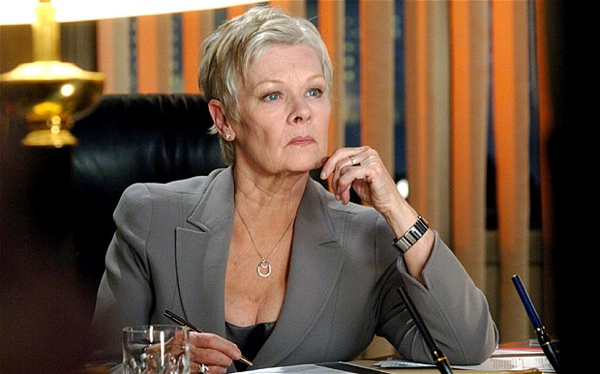
Two female characters are bedded and disposed of (quite literally in one case) with zero fanfare or sentiment. One is LITERALLY TOLD TO SHUT UP by her male colleague during a court proceeding. Meanwhile, in series regular territory, we're back to having a posh toff male heading up MI6, while our clever and highly competent field agent suddenly reveals her life's aspiration to be "sexy secretary". That's zero for five, Skyfall.

NewImage

Let's start with Eve, who inspired this post. She spends the entire film being punished for a small mistake she makes under M's orders, while Bond goes around screwing up so badly that he can't even pass the physical fitness exam. Even worse, despite saving Bond's (and everyone's) lives twice in the interim, she somehow decides that she's not competent to be a field agent, simply based on a throwaway comment from Bond. The kiss of death? It turns out that she not only decides to be a secretary, she's actually gonna be that secretary (you remember the one. In fifty years of Bond films, she's notable for alternating "sexy" and "nagging" and "why don't you ever return my calls?".

To be honest, if she started the film as a secretary who went out into the field and then decided she wanted to stay behind the desk, I might have hand-waved it. But to invite the audience to smile knowingly as a capable agent surrenders her power to a man who was once her equal palls.

And why the hell did she end up shaving Bond? Is she his wife? Fail.

NewImage

The head of the government inquiry may have been a touch long-winded, but her points were neither hysterical nor invalid. And as any student of the British government knows, long-windedness is not an affectation, but an expectation. Mallory's flippant shutdown of her right to speak (she's the fucking head of the inquiry!) is both against the way government inquiries work, and just flat offensive. And also, the audience is supposed to laugh. Women talking too much! Hilarious!

NewImage

The whole Séverine subplot was incredibly bizarre. Bond finds her both traumatized and full of fear from being sold first into sex slavery and then to Silva, and nonetheless chooses to have her by sneaking up on her in the shower. Of course, James Bond is basically male privilege made flesh, but come on dude, she's TERRIFIED. She doesn't want your dick. Also, if he was so desperately taken with her, one would think he'd have slightly more of a reaction to her death-by-dick-measuring-contest. But la-di-da.

NewImage

M comes closest to success, but we've spent enough time with her to know her pretty well (remember her fantastic introduction in Goldeneye?) Nonetheless, she dies pretty stupidly. She has no facility with a gun, knows it, but still sits out as a target, despite a wonderful escape route? Sure, she set off some exploding chandeliers, but what was the plan here? She's the head of the MI6, not some domestic terrorist. So we not only get Mallory accusing her of incompetence, she proves him right. M, who never makes a false step, makes a series of them in Skyfall. So she dies, freeing Bond of the only female who can stand up to him in every regard.

NewImage

After the women are handily put in their places, Skyfall leaves us with the image of Bond and Mallory talking shop, drinking whisky and smirking about a job terribly done (guys, the head of MI6 is dead! I don't know how you define a job gone horribly wrong, but I am PRETTY SURE THAT'S ONE OF THEM). Mallory failed to track Silva despite Q's technical wizardry, and he still ends up boss. All the women end up dead or demoted, and the men get promoted.

I haven't even discussed the queerification of Silva ("Sure, he's killed a lot of people and blown up buildings, but what's really horrifying is that he might be homosexual!"), but that may be a topic for another day.

So long and thanks in advance for your polite, well-reasoned comments.

Read More
Posted in 2012, Feminism, Gender, Movies, Review | No comments

Friday, 23 November 2012

Filling the Gaps: Black Narcissus

Posted on 12:13 by Unknown

NewImage

I didn't set out to watch a "Black" film on Black Friday, (nor do I wish to pretend that "Black Friday" deserves codification as anything other than a commercial black hole). An interview with Martin Scorsese, who described a certain moment in the film as the one that forced him to become a filmmaker, led me to pluck Black Narcissus from the quicksand of my Netflix queue.

Like me, dear reader, you may have the wrong impression of the film (and the Netflix description certainly doesn't help, with its vague intimations of a crisis of faith in exotic lands, tagging the film in the "faith and spirituality" bucket).

Black Narcissus has elements of horror, romance, and the subtly erotic (the horror scenes are perhaps the most unexpected, and the most beautiful). It's more in the vein of In The Mood for Love than of the "stiff upper-lip" films that transfixed post-war Britain. Sex and desire are ever-present, even through our leads spend most of the film wearing nun habits.

Five nuns, led by Deborah Kerr's Sister Clodagh, move to a remote palace in the Himalayas, kindly lent by an Indian general in exchange for providing schools and medical services to the local children. The sisters are forced to rely on Major Dean, a Brit who know his way about the locals. Needless to say, sparks fly in many directions.

NewImage

Clodagh's studied restraint sits against the animal attraction between the Indian prince and Kanchi, a lower-class girl rejected by her family for being too open in her many affections. Rather than suggesting that this is some native savagery, Sister Clodagh comes to envy their youthful impetuousness, troubled by regrets of her own.

 

Now, despite being set in the remote hills of the Himalayas, Black Narcissus was fully filmed in Britain, at the Pinewood Studios. Which perhaps accounts for the one jarring weakness in the film.

Despite carefully researching the architecture, the climate and the foliage of its remote setting, the powers-that-be still chose to brownface the female Indian lead, Kanchi.

Screen shot 2012 11 23 at 2 49 20 PM

In an incredible scene, we see Simmons do traditional Indian-style dancing, and to her credit, she's very good at it. But why not hire an Indian actress trained in classical dance? Which, as anyone who's seen even a single Indian movie knows, is literally every Indian actress (I could explain the reasons for intersection of dance and theatre in both classical and modern Indian culture, but I'll spare you).

It's even more jarring when you consider how carefully the film deals with "otherness". Certainly our good nuns believe they're bringing enlightenment to the savages, but Powell and Pressburger make no such judgment. In fact, with one line from our extremely handsome male lead (WWJD), the filmmakers reveal the inherent silliness of such beliefs, that if bringing the "light" means turning a man against his own family, it cannot possibly be more righteous.

(Clodagh and her sisters do come to recognize this, and certainly this contributes to their turmoil. If the motives of the Holy Order could be so wrong about one thing, why can't they be wrong about others, especially the right of a woman to be a woman?)

Basically, the filmmakers are saying that being one of the darkies is in fact a perfectly acceptable (even beautiful) human condition, unless of course you're in a mainstream movie. In which case, bust out the brown foundation and raven-colored hair dye.

Powell and Pressburger's film is well regarded as one of the first masterpieces of technicolor filmmaking, and I'd go so far to say that it's still one of the most beautiful films in existence.

NewImage NewImage

Despite its one great failing, Black Narcissus still stands up as a great study of what makes us human, even under the most stringent rules in the most trying of circumstances. Go watch it, then come back and play in the comments.

Read More
Posted in Filling the Gaps, Film, Review | No comments

Tuesday, 20 November 2012

Tana French's "Faithful Place", Or, Murder Goes Very Very Irish

Posted on 06:09 by Unknown

NewImage

Having purchased it years ago, I'm embarrassed to admit that I've only just got to Tana French's wonderful Faithful Place, a magnificently propulsive murder mystery set in the forgotten spaces of a swiftly gentrifying Dublin.

In Nick Hornby's slightly hysterical call for a quota on "literature about literature" in The Polyphonic Spree, he elucidates why novels like Faithful Place are so impressive:

"Writing exclusively about highly articulate people...Well, isn't it cheating a little? McEwan's hero, Henry Perowne, the father and son-in-law of the poets, is a neurosurgeon, and his wife is a corporate lawyer; like many highly educated middle-class people, they have access to and a facility with language, a facility that enables them to speak very directly and lucidly about their lives (Perowne is "an habitual observer of his own moods"), and there's a sense in which McEwan is wasted on them. They don't need his help. What I've always loved about fiction is its ability to be smart about people who aren't themselves smart, or at least don't necessarily have the resources to describe their own emotional states....It seems to me to be a more remarkable gift than the ability to let extremely literate people say extremely literate things."

So here we find ourselves, with Frank Mackey, back in Faithful Place, where working class" still counts as mere aspiration. Faithful Place has a very particular geography, all secret paths and abandoned buildings and dangerous cellars. And like most communities within communities, it has its own set of rules, blunt and simple:

"No matter how skint you are, if you go to the pub then you stand your round; if your mate gets into a fight, you stick around to drag him off as soon as you see blood ... even if you're an anarchist punk rocker this month, you go to Mass on Sunday; and no matter what, you never, ever squeal on anyone."

In a street of bruisers, its all too easy to let the characters go undefined, to have them inhabit archetypes of thugs, thieves and scoundrels that readers are all too familiar with. But that's where French's easy facility with language comes in. She takes us on a tour of Faithful Place and introduces us to Mackey's estranged family members one by one, his abandoned friendships, the very conversations that polluted the air during his ill-fated romance with Rosie Daly.

The mystery of who kills Rosie Daly certainly has its own interest, but the characters really shine here. Faithful Place is also very funny:

"My parents didn't like people with Notions; the Dalys didn't like unemployed alcoholic wasters."

I know I'm late to the party here, but if you somehow missed Faithful Place over the past couple of years, I highly recommend picking it up.

Read More
Posted in Book Review, Books, Review | No comments

Thursday, 15 November 2012

Keep Brooklyn Weird: Fulton's Rather Mad Hatter

Posted on 17:59 by Unknown

NewImage

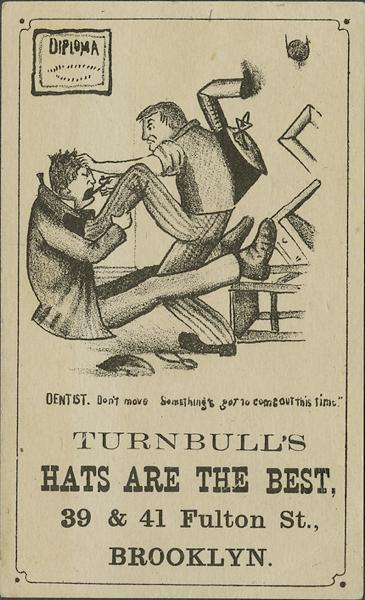
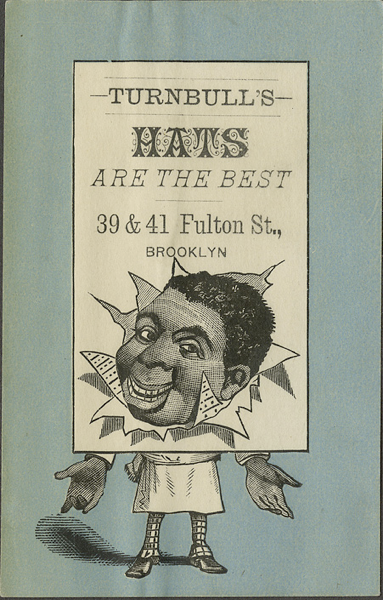
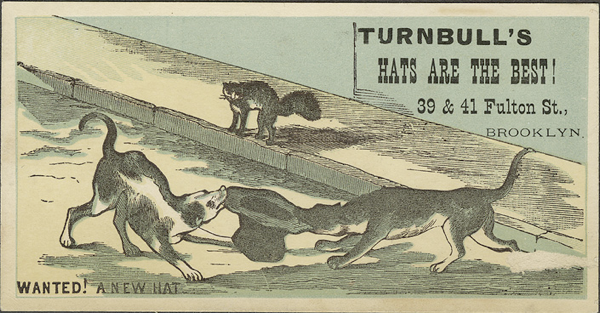
In a space that now houses Gran Electrica, Dumbo's foray into fine Mexican food, there once lived a haberdashery with a rather bizarre marketing strategy. While we can all thank Lewis Carroll for introducing us to the effects of mercury on lonely haberdashers (twinkle...twinkle...little...bat...), the reality of this particular mad hatter seems a trifle darker.

Can you explain how 2 chickens fighting over a frog could possibly convince the New York public to purchase new hats? (please invent your own captions in the comments)

NewImage

And to think that you'd receive a free copy of this non sequitur just for gracing Turnbull's house of mercury poisoning? Keep on, dear reader, for the chicken-fight may be the most sensical of Mr. Turnbull's ads.

"Turnbull's hats turn dentists into vigilantes!"

NewImage

"Turnbull's hats make cartoonish minstrels into cartoonish minstrels."

NewImage

"Turnbull's hats give errant cats psychic control over the universe!"

NewImage

You may enjoy many more ridiculous (and also beautiful) ads in the Brooklyn Public Library's digitized archive.

Read More
Posted in Ads, Brooklyn, History, New York, Vintage | No comments

Thursday, 8 November 2012

Teddy Roosevelt Reviews Anna Karenina While Chasing Thieves (He is JUST that cool)

Posted on 06:18 by Unknown

NewImage

Teddy Roosevelt once chased some bandits down a frozen river, captured them, and then found himself (and them) trapped on the frozen river for eight days. Being a forward-thinking man, he'd brought along Matthew Arnold's poems and Tolstoy's Anna Karenina.

In the course of being stuck, he not only managed to keep watch on his prisoners, but read both books completely, and even wrote a letter to his sister reviewing the book. ALL WHILE STUCK ON A FROZEN RIVER WITH THREE DANGEROUS BANDITS WITH NO FOOD BUT DRY FLOUR.

Sorry, I just had a case of the vapours ::fans self::

Ahem.

Basically he shares my essential reaction to the book, which might be summed up as "Anna! Stop being so cray-cray! Oh yay, thank goodness for the sanity of Levin."

Anyway, I'll let him speak for himself:

“I took Anna Karenina along for the trip and have read it through with very great interest. I hardly know whether to call it a very bad book or not. There are two entirely distinct stories in it; the connection between Levine’s story and Anna’s is of the slightest and need have existed at all. Levine’s and Kitty’s history is not only very powerfully and naturally told, but it is also perfectly healthy. Anna’s most certainly is not, though of great and sad interest; she is portrayed as being a prey to the most violent passions, and subject to melancholia, and her reasoning power is so unbalanced that she could not possibly be described otherwise than as in a certain sense insane. Her character is curiously contradictory; bad as she was however she was not to me nearly as repulsive as her brother Stiva; Uronsky had some excellent points. I like poor Dolly, but she should have been less of a patient Griselda with her husband. You know how I abominate the Griselda type. Tolstoi is a great writer. Do you notice how he never comments on the actions of his personages? He relates what they thought or did without any remark whatever as to whether it was good or bad, as Thucydides wrote history--a fault which tends to give his work an unmoral rather than an immoral tone; together with the sadness so characteristic of Russian writers. I was much pleased with the insight into Russian life."

Check out the original letter.

If you want more of an account of the actual bandit-chase, you can find it here in Teddy's own words.

Most importantly, read Edmund Morris's amazing biography.

Read More
Posted in Books, Dead Russians, History, Roosevelt, Writing | No comments

Tuesday, 6 November 2012

Anti-Suffrage Ads of Yore: The Threat of "Petticoat Rule"

Posted on 10:07 by Unknown

Vote no1

"Housewives! You do not need a ballot to clean out your sink spout!"

NewImage

Published by the Albany Association Opposed to Women's Suffrage. What makes this even more odd is that one of the main contributors to this organization was Mary Arthur, better known to you as the sister of President Chester Arthur.

Read More
Posted in Feminism, politics | No comments

Friday, 2 November 2012

The Good Wife Season 4: "Waiting for the Knock," or, Eli Gold Learns What Hubris Meant to the Greeks

Posted on 16:37 by Unknown

NewImage

The Good Wife's "Waiting for the Knock" felt like the middle section of a very long novel - the writing's sharp as ever, you're still having a great time engaging with it, but you can't help but feel like the writers are taking a little bit of a breather before they get to the really juicy stuff.

That said, I'm more than intrigued by the new tone the show's adopting. The show's always been happiest in the moral grey area, but its ethos always centered on Newton's third law - every action leads to an equal or opposite reaction - which, in The Good Wife, means that even the direst consequences stem from an action taken, even if those actions are long-forgotten.

But then, most of the driving factors from the episode centered from something that didn't happen, a void of an intern who seems to have a black hole in her head. That Peter didn't actually sleep with her turns the narrative into a Greek tragedy - Maddy found the excuse she needed to turn on Peter (indeed, it seems like she was looking for that excuse from the start), and the blogger hurls away from the void in his own rocketship, powered by grist from the rumor-mill.

But we're not Greeks, and we know that the gods don't actually punish us for our hubris, and yet, it's the only explanation. Without Eli's arrogant response to the journalist, without his quickness at employing the heavy hand of Lockhart Gardner, without his incorrect belief that lying to Maddy would be the right way to keep her on board, none of these need have happened.

It's strange for a mainstream CBS show to use such subtleties to drive its narrative, but of course we know that our show possesses those characteristics in name only - it really is a most uncommon show.

TRAGIC IRONY THY NAME IS GOOD WIFE!

OTHER

-Welcome back, Cary! I've missed your pretty face so! And kudos to the Kings for manufacturing hilarious homoeroticism between you and NATHAN LANE of all people. And thusly a thousand fanfics were born...(gif credit to fyeahcaryagos.tumblr.com)

Tumblr mcux04utIp1rpap4io1 500

-Diane would totally get into a dick-measuring contest with an opposing lawyer of any gender. Just one of the trillion reasons that we love her so.

-Kalinda, oh Kalinda. Stop involving thyself with douchebags, whether female FBI agents or British faux-thugs.

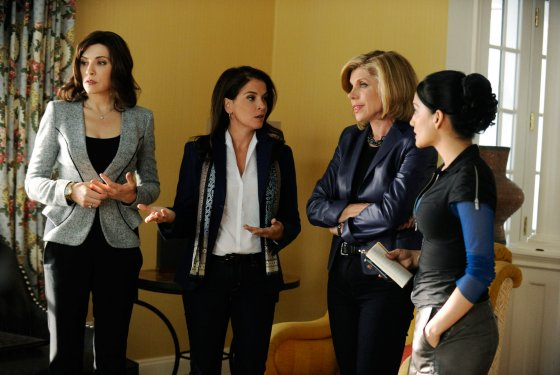
Finally, just posting photos of Cary Agos because hello! He finally had a role! And more because the gym trainer is clearly jealous of the love he shares with Nathan Lane.

NewImage

Read More
Posted in The Good Wife, TV | No comments

Thursday, 1 November 2012

Halloween Must-Watch: Suspiria

Posted on 08:54 by Unknown

NewImage

"The only thing more terrifying than the last 12 minutes of this film are the first 92," reads the tagline for Suspiria, Dario Argento's accidental adaptation of Alice in Wonderland. Our heroine encounters three impossible things before breakfast, though it takes until dinnertime before she believes them.

Death, sorcery, witches. Our human tendencies prevent us from accepting a description of death as it truly is -- utterly mundane. Death is simple; expiration. Suspiria pretends at creating horror at the manner of death, while Argento knows (and shows) that the real horror is loss. We feel that undercurrent running through every action in the film; loss of control, loss of power, loss of sanity, loss of love. When you reach that point, there's nothing left. Just more death. Everyone reacts to the first loss in the film. We never meet her, but we can figure her out by the way people miss her.

Argento fuses German expressionism (think of the side-eyed angles in The Cabinet of Dr. Caligari) with a gleeful bloody mindedness the likes of which I've never seen. 35 years have passed since Suspiria came out; no horror movie shows such originality in its set-pieces. Argento takes full advantage of your visual senses, using color and design to great effect.

NewImage

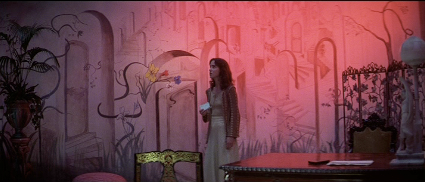
Suzy Bannion trips lightly through this rabbit hole, a ballet school where students mysteriously disappear and horrific accidents happen to all who cross the tightly drawn Madame Tanner. Part of the surreality of the film comes from Bannion's "curiouser and curiouser" attitude to the awful events that surround her. Even as the ballet school descends further and further into the pit of despair, she's mostly unaffected, which is for the best. Otherwise, the audience would be sitting in constant despair.

NewImage

Suspiria takes horror back to its roots: nightmares. Think of your nightmares; even the most terrifying are more rooted in whimsy than in terror. The terror, in fact, plays in almost incidentally to the strange narratives our minds plant in our dreams.

After you see it, come back and tell me your thoughts. And that's an order!

Trivia

The building filmed as the dance academy actually exists, including the loony exterior:

NewImage

The Haus zum Walfisch can be found in Freiburg, Baden-Wurttemberg, Germany, and was known as the House of the Whale when it was built in 1516.


Read More
Posted in Filling the Gaps, Film, halloween, horror | No comments

Wednesday, 31 October 2012

E.B. White on Hurricanes and Mass Media

Posted on 07:15 by Unknown

NewImage

A day before Frankenstorm, one could practically see the mainstream media rubbing its fingers together in delight. "At last!" they cried in chorus, "Something to distract us from the electoral snooze-fest permeating the airwaves!" And thusly began 24/7 coverage of issues both related and tangential, like damage, cost, and "HOW WILL OHIO COPE???".

The anticipation was so feverish that, despite this being one of the worst natural disasters ever to hit the country, poor Sandy still couldn't live up to expectations (for this one to live up to expectations, Sandy would have needed to produce a hurricane, a snowstorm, an alien invasion and a resurrected Osama Bin Laden).

Well, if it's any consolation, the mainstream media set impossible expectations long before cable news networks had 24 hours of programming to fill. One well-known writer produces the evidence.

E.B. White, known to many of you as "the guy who wrote that book about the pig becoming friends with a spider", was a prolific essayist, contributing regularly to The New Yorker and Harper's Monthly. I bought his book of essays after reading some particularly profound words about NYC (Here is New York) at a time when I still sought my place within this urban Wonderland.

In "The Eye of Edna", 1954, he documents one reporter's abject disappointment at the fact that Hurricane Edna did little more than moisten Long Island:

It became evident to me after a few fast rounds with the radio that the broadcasters had opened up on Edna awfully far in advance, before she had come out of her corner, and were spending themselves at a reckless rate. During the morning hours, they were having a tough time keeping Edna going at the velocity demanded of emergency broadcasting. I heard one fellow from, I think, Riverhead, Long Island, interviewing his out-of-doors man, who had been sent abroad in a car to look over conditions on the eastern end of the island.

‘How wet would you say the roads were?’ asked the tense voice.

‘They were wet,’ replied the reporter, who seemed to be in a sulk.

‘Would you say the spray from the puddles was dashing up around the mudguards?’ inquired the desperate radioman.

‘Yeah,’ replied the reporter.

It was one of those confused moments, emotionally, when the listener could not be quite sure what position radio was taking — for hurricanes or against them.

A few minutes later, I heard another baffling snatch of dialogue on the air, from another sector — I think it was Martha’s Vineyard.

‘Is it raining hard there?’ asked an eager voice.

‘Yes, it is.’

‘Fine!’ exclaimed the first voice, well pleased at having got a correct response…..

Read More
Posted in Books, Hurricane, Media | No comments

Tuesday, 30 October 2012

Tuesday Three: Fictional New York Weatherpocalypses

Posted on 11:17 by Unknown

NewImage

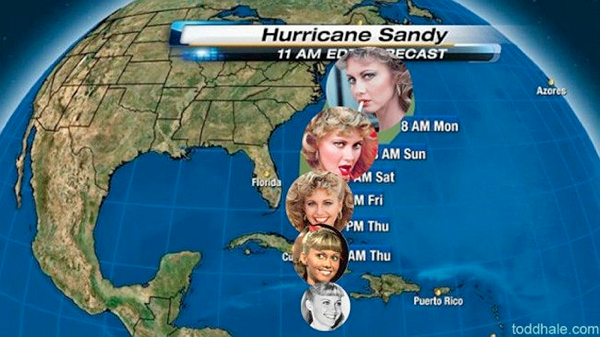
As Hurricane Sandy (known to some of you as FRANKENSTORM and to the more pedantic of you as THE METEOROLOGIST'S MONSTER) swaddles the Eastern seaboard with an extremely wet blanket, my thoughts turn to fictional New York weatherpocalypses past. These are their stories. DUN DUN.

1. The Day After Tomorrow

NewImage

My greatest Frankenstorm pleasure (apart from a couple of extra "work-from-home" PJ days) derives from a lingering memory of a bunch of Oxbridge holier-than-thous snickering through a screening of The Day After Tomorrow at an environmental agency I once worked at.

"New York city shalt not be graced by a hurricanous monstrosity in any reality!" they exhaled, along with hearty fumes of red wine and superiority.

Now I'm not going to pretend that The Day After Tomorrow offers a portrait of anything approaching reality, but complaining about a lack of verisimilitude in a Roland Emmerich film is a bit like complaining that an orange tastes of citrus. What The Day After Tomorrow DOES give us, in order of priority, is a shirtless Jake Gyllenhaal (at a time when he still belonged to the indie kids), and amazing special effects shots of the New York Public Library drowned in a snow-pocalypse (Brangelina aint got NOTHIN' on weather-related portmanteaus...).

2. AI: Artificial Intelligence

Screen shot 2012 10 29 at 3 04 49 PM

Because it's never quite obvious that the weatherpocalypse has already happened long before the start of the movie, AI's controversial coda hits you in the face like a sickly sweet rhubarb pie. When I first saw the movie, I was the classic "love the movie, hate the ending" viewer, until I watched it a second time and suddenly got it.

Setting plays an important role here, implying that Kubrick's overall intent was something closer to Tree of Life than to his usual bleakness. It's the the crisis of human existence boiled down to its most fundamental battle: the creations of man vs. the creations of nature. And the beauty of AI is that it's impossible to figure out exactly who's winning between those dueling spawns, though humankind clearly lost. Poor David clings to the last vestige of what once defined humanity, until even that's lost.

3. Planet of the Apes

NewImage

Planet of the Apes was a great obsession of mine as a kid (that includes all the offshoots, even the tv show, which inspired my first fanfiction, written as a lonely 10 year old in Jakarta, Indonesia). I haven't revisited the classic films since my tweens (I watched them so many times I can still see every scene in head), and as my mind developed, I came to realize that the films are microcosms of mankind's worst tendencies, especially the first film.

Planet of the Apes basically amounts to a wet dream for xenophobes, operating on the premise that as white men become the minority, the new colored overlords are barbaric murderers, concerned only with the downfall of the white men. (I'll take this opportunity to point out that the human women left in this particular white supremacist nightmare fantasy land LITERALLY HAVE NO VOICE).

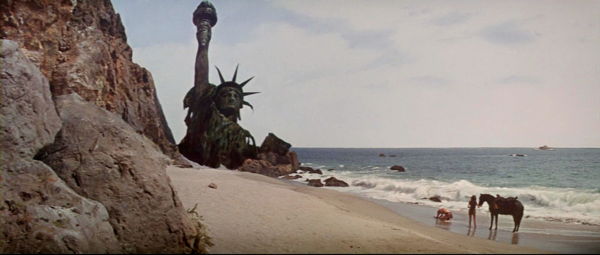
But none of that dulls the impact of the incredible reveal at the end of the film, the only scene left from Rod Serling's original script for the movie. Taylor and Nova finally make it to the Forbidden Zone, only to find out that the "alien planet" he's landed on is, in fact, post-apocalyptic Earth. We don't know the exact circumstances that led to our Great Lady's semi-burial, but it's a decent guess that the climate had a fair bit of impact in the 700 years since Taylor and his fellow astronauts left Earth.

Conclusion

Weatherpocalypses fast and slow have long been a Hollywood obsession, so there are FAR more films that I haven't even touched upon. What are your favorites, whether New York or not?

Read More
Posted in Feature, Film, Friday Five, Movies | No comments

Tuesday, 16 October 2012

Gap's Totally Not-Racist "Manifest Destiny" T-Shirt

Posted on 06:29 by Unknown

NewImage

About a month ago, Gap released a special series of GQxGap crossover designs by Mark Mcnairy, who GQ dubbed one of America's "Best New Designers." While it's concerning that a man who writes white letters on t-shirts can be consider a "best new" anything, we're not here to talk about design. We're here to talk about manifest destiny.

The charitable view suggests that Mr. McNairy does not know what the term means. Let's let the originator, one John L. O'Sullivan in 1845, explain his phrase:

And that claim is by the right of our manifest destiny to overspread and to possess the whole of the continent which Providence has given us for the development of the great experiment of liberty and federated self-government entrusted to us.

So what did this mean? The Belle Jar explains what this means better than I could (I would just sing a tune of GENOCIDE! GENOCIDE!):

Manifest Destiny and the philosophy behind it are responsible for a whole bunch of really terrible things. It was used to justify the Mexican-American War, the War of 1812, and, most appallingly, the Indian Removal Act. Manifest Destiny was used to vindicate the myriad abuses suffered by people of colour at the hands of white North Americans. It’s the philosophy that lead to our continent-wide reservation system , not to mention the residential schools created for the Aboriginal peoples of Canada.

The effects of Manifest Destiny can still be felt, in the poverty and degradation suffered by American and Canadian people of colour, and in the deplorable conditions found on many reserves, both here and south of the border. The ideas behind manifest destiny still exist in our white western consciousness, as much as we might be loathe to admit it; they come up every time our (largely white) government asserts that it knows best when it comes to First Nations issues, or every time someone complains about how much freaking money has already been spent on Attawapiskat only to have their community still be in a state of crisis. Manifest Destiny is apparent every time someone chooses to be bigoted and wilfully ignorant about non-white immigrants, or tries to deny the far-reaching effects of racism; it’s apparent in the mindset of all the people who never take a moment to wonder why or how so many white people ended up owning so much fucking land.

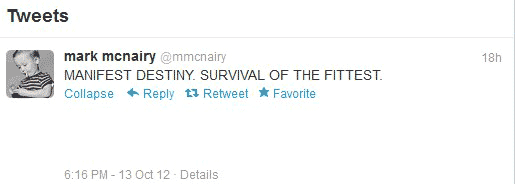
Unfortunately, social media proves that he's very much aware of the phrase's significance. After one student created a Change.org petition against the shirt, Mcnairy replied with a tastefully crafted tweet (now deleted, of course):

NewImage

Yes, survival of the melanin-deficient folks with the big sticks that go boom.

Gap (and McNairy) probably aren't trying to start a race war; they probably think that "ooh! this is a phrase that someone cool once said, maybe even the sort of hipster who wears black t-shirts with white lettering!" Or even more charitably, "let's reclaim the phrase for capitalism! We're promoting the destiny of lawbooks!"

But Gap is one of the guiltiest parties in subverting human rights by using sweatshops overseas. Even in markets with rigid anti-sweatshop laws, like South India, the conditions are appalling - open sewage streaming out into unpaved streets in remote factories, 12 hour days even when the monsoon floods the workroom floor.

This is manifest destiny today. That it's ok for the "not-we" to suffer so Americans can have cheap clothes.

The lingering effects of manifest destiny, well, they linger.

Mark McNairy has issued an official apology. Gap has removed the shirts from the website, but they're still available in stores. Make of that what you will.

Read More
Posted in politics, Race | No comments

Monday, 15 October 2012

The Good Wife Season 2: "Two Girls, One Code"

Posted on 18:56 by Unknown

NewImage

It's a long time since Alicia ran out of the office with an expression screaming "DANGER WILL ROBINSON! NAUSEA! NAUSEA!". I admit, I kinda miss it. Julianna Margulies is at her best when Alicia's falling apart.

Last night, we saw Alicia drift on, borne ceaselessly into the past. Barely even touched by friction, she raced to a moment that's been building up for the past ten episodes or so: a temporary (and totally inevitable) reunion with Peter.

A variety of external forces attempted to fight against this - an intrepid reporter, an overzealous (and touched in the head) intern, and Alicia's own shenanigans. But none could stand in the way of the boulder rolling down the hill. You can fight gravity, but you'll always lose.

I'm not sure that Peter will be Alicia's last stop, but I'm happy for the show to explore this for a time. After all, when Alicia blips that she no longer cares what Peter does, Margulies' performance seems all too convincing. When she kisses Peter, one can easily believe it's driven by basic relief that she won't face a second round of public embarrassment.

The Case of the Week

You know those moments where you literally watch someone shrink before your eyes? A veil of worship lifts and the person you're looking out becomes small, perhaps even grotesque.

Well, this week's case was all about people trying to eye-shrink each other. Watching Will duke it out with gross Gross couldn't possibly have been more satisfying. The judge tore Viola and Ross to shreds, Ross tried (and failed) to tear Will to shreds, and somehow, even though the firm technically lost, we're left certain that they won. It's because Gross's "win" is so petty and, well, gross. Talk about a sore loser.

So of course our heroes laugh it off, and even Nathan Lane is forced to smile.

Kalinda and Horror-show: Let's just say, I have high hopes for Lemond Bishop's murderous instincts.

Play along in the comments! Thoughts on the ep?

Read More
Posted in The Good Wife, TV | No comments

Sunday, 14 October 2012

Mark Twain's Presidential Stump Speech

Posted on 06:47 by Unknown

NewImage

When the so-called silly season rounds the bend of silly and enters into a world that might kindly be described as completely absurd, I turn to the master of the absurd himself: one Samuel Clemens, née in your mind as Mark Twain.

As serendipity goes, I happened to be reading Penguin Books' collection of Marky Mark's "Tales, Speeches, Essays, and Sketches," which features a little gem called "A Presidential Candidate", which ran in the New York Evening Post on June 9, 1879.

There's more than an element of Jonathan Swift here: "Desiccate the poor workingman; stuff him into sausages!," he prescribes, as tasty a recipe for canned workingmen as can be found anywhere.

But I'll distract you no longer. Laugh/grimace away.

"A Presidential Candidate", by Mark Twain

I have pretty much made up my mind to run for President. What the country wants is a candidate who cannot be injured by investigation of his past history, so that the enemies of the party will be unable to rake up anything against him that nobody ever heard of before. If you know the worst about a candidate, to begin with, every attempt to spring things on him will be checkmated. Now I am going to enter the field with an open record. I am going to own up in advance to all the wickedness I have done, and if any Congressional committee is disposed to prowl around my biography in the hope of discovering any dark and deadly deed that I have secreted, why -- let it prowl.

In the first place, I admit that I treed a rheumatic grandfather of mine in the winter of 1850. He was old and inexpert in climbing trees, but with the heartless brutality that is characteristic of me I ran him out of the front door in his nightshirt at the point of a shotgun, and caused him to bowl up a maple tree, where he remained all night, while I emptied shot into his legs. I did this because he snored. I will do it again if I ever have another grandfather. I am as inhuman now as I was in 1850. I candidly acknowledge that I ran away at the battle of Gettysburg. My friends have tried to smooth over this fact by asserting that I did so for the purpose of imitating Washington, who went into the woods at Valley Forge for the purpose of saying his prayers. It was a miserable subterfuge. I struck out in a straight line for the Tropic of Cancer because I was scared. I wanted my country saved, but I preferred to have somebody else save it. I entertain that preference yet. If the bubble reputation can be obtained only at the cannon's mouth, I am willing to go there for it, provided the cannon is empty. If it is loaded my immortal and inflexible purpose is to get over the fence and go home. My invariable practice in war has been to bring out of every fight two-thirds more men than when I went in. This seems to me to be Napoleonic in its grandeur.

My financial views are of the most decided character, but they are not likely, perhaps, to increase my popularity with the advocates of inflation. I do not insist upon the special supremacy of rag money or hard money. The great fundamental principle of my life is to take any kind I can get.

The rumor that I buried a dead aunt under my grapevine was correct. The vine needed fertilizing, my aunt had to be buried, and I dedicated her to this high purpose. Does that unfit me for the Presidency? The Constitution of our country does not say so. No other citizen was ever considered unworthy of this office because he enriched his grapevines with his dead relatives. Why should I be selected as the first victim of an absurd prejudice?

I admit also that I am not a friend of the poor man. I regard the poor man, in his present condition, as so much wasted raw material. Cut up and properly canned, he might be made useful to fatten the natives of the cannibal islands and to improve our export trade with that region. I shall recommend legislation upon the subject in my first message. My campaign cry will be: "Desiccate the poor workingman; stuff him into sausages."

These are about the worst parts of my record. On them I come before the country. If my country don't want me, I will go back again. But I recommend myself as a safe man -- a man who starts from the basis of total depravity and proposes to be fiendish to the last.

Read More
Posted in Humour, Mark Twain, politics | No comments

Sunday, 7 October 2012

The Good Wife: Season 4 Premiere

Posted on 14:42 by Unknown

Unlike previous seasons of The Good Wife, we're not starting the new season with a large unanswered question. This time, we start with a bunch of smaller questions, and by the end, we have a few more.

As a result, the premiere feels slightly directionless, even as it hints at the major themes of the year (more on these shortly). I assume part of the reason for the lack of cohesiveness is Alicia's physical separation from the Lockhart Gardner troubles. Dealing with Zach's sass-induced arrest has no relation to the financial issues at LG.

In many ways, she's also emotionally separate: she's in a good place in her life, she doesn't need to have everything in her life neatly defined (this is HUGE character growth for her), and the events of the past three years have left her with numerous fallback options, professionally speaking.

All of a sudden, she's moving very easily from politics to parenting to lawyering. One can only assume this cometh before a fall, as the most common trait of the jacks (and jills) of all trades is taking shortcuts. We see her do this in every way possible: she leans on Cary to use his connections, she leans on Peter to use his connections, and at the end of the episode, she makes the false assumption that she can have all of that and still be everything to Will.

I'd like to think that her newfound confidence comes from having her trusty sidekick/best friend by her side.

But now sidekick's got her own story! And I'm not sure I like it. Part of it's my rampant hatred of Marc Warren, who bears the honor of starring in the worst episode of Doctor Who ever, new or old. Also he's just LAME, with his midnight sun tattoo and his muscle shirts and his silver chain. I trust the Kings to show why he's any kind of match for Kalinda, but its going to take some effort.

That said, I'm mostly excited for the New Normal. It seems like The Good Wife's a rehab clinic for actors who've long ago been typecast as hopelessly broad (Alan Cumming, hello), and I'm as shocked/pleased as anyone at Nathan Lane's restrained performance. And I hope Kristen Chenoweth returns to spoil Alicia's comfortable uncertainty about the state of her marriage and to spoil Eli Gold's piece of mind.

So where are we going this season? Here are my guesses at the major questions for the season:

  • How will Alicia be affected by no longer being the most important character in Kalinda's narrative?
  • Is Zach more of an Alicia or a Peter?
  • What is the state of the Florrick marriage? Does it even matter? Should we just be rooting for Alicia to make it on her own after all
  • What strange costume will David Lee wear to the office this year?
  • How will Grace top herself in the department of incredible yet entertaining lack of logic?
  • WILL CHRIS NOTH BE ON THE SHOW FULL TIME???
  • Will Chandler Bing's show please be cancelled so he can smarm his way through Chicago politics full-time?

And MOST IMPORTANTLY, will any scene this season top the pure ridiculous hilarity of this scene?:

Read More
Posted in The Good Wife, TV | No comments

Why You Need to Watch Scandal

Posted on 10:41 by Unknown

NewImage

Unlike with many shows, I can actually name the moment I fell in love with Scandal. It's the most comfortably feminist show on television this side of The Good Wife, and one of the tightest, plottiest thrillers in recent memory. But that's not why I fell in love.

Scandal already earned a certain amount of goodwill from me for its African-American female showrunner and African-American female lead (seriously, when's the last time those conditions happened on their own, let alone in tandem).

But goodwill rarely translates to love. Goodwill's the annoying kid sister of love, or that boy who's so nice to you that you really want to like him, who treats you so superficially well that you stay faithful to him for months on end despite flavorless sex and a deep-seated yet ever-increasing disdain for his total obliviousness to how you really feel about him.

Luckily the show quickly surpassed my highest expectations. Scandal has a secret weapon, a character who reminds us in every appearance that this show is something else: Mellie, the President's not-really-suffering wife.

The first episode suitably introduces the show and the characters, but fail to tell us that the show will be anything more than a higher-stakes political simulacrum of Grey's Anatomy. We learn that our protagonist's one true love is the man she can never have (and by this point, really doesn't want to have). It's funny, it's witty, it's thrilling, etc.

Episode Two turns the show into a thriller (and what a magnificent ride it continues to be). Hints of conspiracy abound, and the audience soon realizes that the emotional stakes of our characters stand small against the stakes of the political mystery (and boy does that mystery build. Rhimes works in one of the most horrifying torture scenes I've ever seen. Like most horrors, what goes unseen is far more disturbing than what's seen).

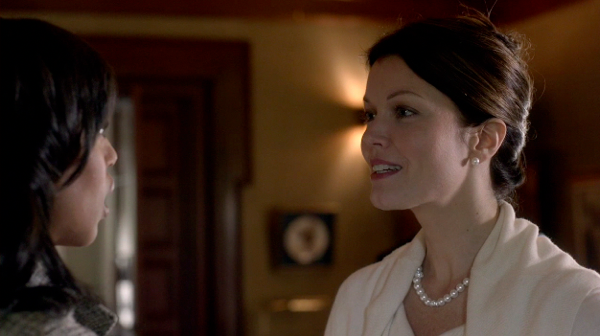
In episode three, Shonda Rhimes mixes in the special sauce. We learn a little more about Olivia Pope (Kerry Washington, whose career's about to explode between this and Django Unchained) and her past relationship with the President. Crucially, a throwaway line, one that whizzes by so quickly that you could easily miss it, reveals that Mellie not only knows about the love affair, but recognizes the role that relationship played in getting her husband elected to the highest office in the land.

NewImage

There's a love triangle alright, but the President doesn't even figure into it: the unifying arc of the show's about Olivia, Mellie, and the Presidency, and the compromises and realignments they make to make sure that the highest office in the land stays intact, and dare I say it, respectable.

This setup allows Shonda Rhimes to wipe her ass with the Bechdel test over and over again. There's a wife and an ex-lover and they don't even talk about relationships. They talk about their roles in the world as they envision it; protecting Fitz, and by extension, their life's work. Their mutual respect and professional need for cooperation, supersede anything so quotidian as stereotypical female jealousy.

Because these woman are comfortable with who they are and what they want, they also have genuine friendships with the opposite sex. Genuinely platonic relationships, without telegraphed sexual tension, still feel sadly revolutionary in contemporary television.

The best thing of all about the show? It's thematic affirmation that in the real world, there are no white hats. No one really lives on the poles of good and evil. I haven't really talked about the other characters of the show, or the ongoing mystery, but I don't want to spoil you (it's twistier than Revenge).

I'm going to start regularly writing about the show, and I hope more of you give it a chance. The first season is streaming on Netflix, and I recommend it for a rainy day.

Read More
Posted in Scandal, Shonda Rhimes, TV | No comments

Wednesday, 26 September 2012

Doctor Who's Power of Three and the Brigadier Problem

Posted on 06:19 by Unknown

NewImage

By now, you've seen (and probably loved, I know I did) The Power of Three. Apart from Darth Vader-Shakri. But I digress!

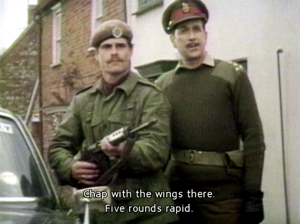
Disclaimer: I love the Brigadier, but I believe that any sort of love is predicated on recognizing him for who he was, not who he wasn't.

I truly believe that it's a wonderful gesture from Steven Moffat to have a Lethbridge-Stewart in an episode featuring the Doctor stuck on Earth. This is the kind of subtle fanservice that both throws a bone to old fans like me and doesn't interrupt the flow of nu-Who.

So I almost hate to be churlish. Almost. While I liked Kate Stewart as her own character, she never quite rang true as a spawn of that Lethbridge-Stewart (though I freely admit to tearing up at the reveal).

NewImage

NewImage

Let's start with a little history. Who is the Brigadier? Just a guest character until the Doctor was stranded on Earth for three seasons, his character existed to problematize the idea of the old-school British hero. You know the type - the manly man saving damsels in distress and pulling out his revolver at every sign of trouble.

They make him full-time as a sort of companion-foil to the Doctor. When he ran UNIT, he and his men were violent thorns in the Doctor's efforts to keep peace in the Universe. (I use the word "men" pointedly. There were no women in his inner circle.). He stands at odds with the Doctors in almost every way, and their relationship remains mostly testy until he retires.

The show made a lot of hay from the Doctor's (and his better companions') tendency to poke fun at the Brig's jingoism, anti-intellectualism, and general sexism. Kate says he valued science. Really, he's a man who only values science insofar as it helps him to kill things more efficiently.

But when it comes to Kate, it's the sexism that's most relevant. Revisionist fans may choose to ignore it, but the Brigadier was pretty much an old-school misogynist. He said something like the following (though this is by far the most egregious) to pretty much every one of the Doctor's female companions, all of whom had to lock him up, throw him out of cars, or generally just run away in order to do their job of being awesome:

BRIGADIER: "Well, you're a young woman. This is a job for my men."
ISOBEL: "Well, of all the bigoted, anti-feminist, cretinous remarks..."
BRIGADIER: "This is no job for a girl like you. Now that's final."

Cue Isobel and Zoe running off and saving the day.

Or my personal favorite, to his wife who's gone off for a joyride with Ace (btw, if there's a better euphemism for "I'm in love with a girl", I don't know what it is):

"But what about supper!"

This clip is a great example of what I mean by his "old-school" sexism. He remains loveable because we know his attitudes are a product of the culture he grew up in. He can't help himself really, and he does better himself in certain respects over time (though never when it comes to women).

Brigadier: Oh, dear. Women. Not really my field.
The Doctor: Don't worry, Brigadier. People will be shooting at you soon.

Nicholas Courtney did a great job of bringing humanity to a character that was already a relic even in the 1970s. I raise his flaws not to say I didn't love him, merely to say that he was flawed.

That said, it's impossible to believe that he even supported Kate having a career, let alone a career at UNIT. She would have had to fight tooth and nail to prove herself, and probably more than once. Someone who grew up that way would not break down at the first sign of trouble. She could not have reached her current title without a whole lot of strong will and self-belief.

But she actually tears up when the cubes become a tiny bit threatening. Maybe we can explain this away by a combination of fear of the invasion and relief that the Doctor's there to help. But I don't know.

I hope she comes back though, nonetheless.


Read More
Posted in Doctor Who | No comments
Newer Posts Older Posts Home
Subscribe to: Comments (Atom)

Popular Posts

  • The Good Wife In Review: "Parenting Made Easy"
  • On Kat Dennings being Fat
  • From the Horseless Sulky to Insane Modern Transport
  • Filling the Gaps: Serpico, or, Al Pacino Tries To Find A Fashionable Hat
  • 10 Years of Celebrating 9/11
  • Fashion Designers Sketch Hunger Games Dress
  • Historical Ephemera: The Secret Language of Postage Stamps
  • Poem of the Day: Robert Lax "The Alley Violinist"
  • Catching Up: X-Men: The First Class
  • Street-view: Fernwaerme Heating Plant, Or, Willy Wonka's Incinerator

Categories

  • 2011 (1)
  • 2012 (9)
  • Abandoned (1)
  • Actresses (1)
  • Ads (1)
  • Anne Hathaway (2)
  • Architecture (4)
  • Art (7)
  • Awesome Thing Of The Day (10)
  • Birthday (1)
  • Blog Noir (2)
  • Blogathon (1)
  • blogging (4)
  • Book Review (17)
  • Books (58)
  • Breakfast Round-Up (1)
  • Brooklyn (1)
  • Bucket List (1)
  • Caine Prize (1)
  • City Lights (3)
  • Comics (1)
  • Crimes Against English (1)
  • Daily Inspiration (3)
  • David Lynch (1)
  • Dead Russians (1)
  • Death Penalty (1)
  • DFW (3)
  • Doctor Who (17)
  • Ephemera (15)
  • Epic Fail (1)
  • etc. (19)
  • Fashion (1)
  • Feature (7)
  • Feminism (10)
  • Filling the Gaps (10)
  • Film (29)
  • Film-Tech (2)
  • Fitzgerald (1)
  • Food and Drink (9)
  • Food/Drink (9)
  • Francophilia (1)
  • Friday Five (7)
  • Fringe (2)
  • Gender (2)
  • Graphic Novels (1)
  • Great Fakeout Songs (1)
  • halloween (1)
  • Health (1)
  • History (13)
  • Hit Me With Your Best Shot (1)
  • hope (1)
  • horror (1)
  • Hot Trailer (12)
  • Human Rights (1)
  • Humour (2)
  • Hunger Games (2)
  • Hurricane (1)
  • Infinite Jest (1)
  • Mad Men (3)
  • Magic (1)
  • Manhattan Malaise (1)
  • Mark Twain (1)
  • Media (4)
  • Monday Music (1)
  • Movies (56)
  • Music (21)
  • Music Video (9)
  • mystery (1)
  • New York (6)
  • Nonfiction (1)
  • Olympics (1)
  • Oscarbait 2011 (7)
  • Oscarbait 2012 (2)
  • Parks and Recreation (1)
  • Photography (5)
  • Podcasts (2)
  • Poetry (11)
  • politics (21)
  • Poster (3)
  • QOTD (1)
  • Race (4)
  • Review (8)
  • Reviewing (1)
  • Roosevelt (1)
  • Salute Your Shorts (1)
  • Sandman (9)
  • Scandal (1)
  • Sci-Fi (6)
  • Shonda Rhimes (1)
  • Short Story Book Club (1)
  • Song of the Day (4)
  • Sports (1)
  • Street-View (1)
  • Sylvia Plath (1)
  • Tech (17)
  • Television (50)
  • The Good Wife (21)
  • TV (39)
  • Twitter (2)
  • Urban Design (1)
  • Veronica Mars (1)
  • Videogames (3)
  • Vintage (1)
  • Winona Ryder (1)
  • Woody Allen (4)
  • Writing (5)
  • Year 27 (1)

Blog Archive

  • ►  2013 (5)
    • ►  March (2)
    • ►  February (1)
    • ►  January (2)
  • ▼  2012 (105)
    • ▼  December (6)
      • Poem(s) for the New Year: DH Lawrence's New Year's...
      • Oscarbait 2012: Les Miserables
      • Charles Dickens' Christmas Drinks
      • Music Video of the Day: Free Winona!
      • The Worst Movie Review Ever, or, Fire This Reporte...
      • Videogame Company Fights the Diversity Fight
    • ►  November (9)
      • The SNL Sketch that Ate Homeland
      • Skyfall's Troubling Gender Politics
      • Filling the Gaps: Black Narcissus
      • Tana French's "Faithful Place", Or, Murder Goes Ve...
      • Keep Brooklyn Weird: Fulton's Rather Mad Hatter
      • Teddy Roosevelt Reviews Anna Karenina While Chasin...
      • Anti-Suffrage Ads of Yore: The Threat of "Petticoa...
      • The Good Wife Season 4: "Waiting for the Knock," o...
      • Halloween Must-Watch: Suspiria
    • ►  October (7)
      • E.B. White on Hurricanes and Mass Media
      • Tuesday Three: Fictional New York Weatherpocalypses
      • Gap's Totally Not-Racist "Manifest Destiny" T-Shirt
      • The Good Wife Season 2: "Two Girls, One Code"
      • Mark Twain's Presidential Stump Speech
      • The Good Wife: Season 4 Premiere
      • Why You Need to Watch Scandal
    • ►  September (5)
      • Doctor Who's Power of Three and the Brigadier Problem
    • ►  August (4)
    • ►  July (12)
    • ►  June (7)
    • ►  May (12)
    • ►  April (8)
    • ►  March (13)
    • ►  February (6)
    • ►  January (16)
  • ►  2011 (190)
    • ►  December (32)
    • ►  November (31)
    • ►  October (40)
    • ►  September (36)
    • ►  August (33)
    • ►  July (18)
Powered by Blogger.

About Me

Unknown
View my complete profile