An Ode to Emma Stone, Easy A

  • Subscribe to our RSS feed.
  • Twitter
  • StumbleUpon
  • Reddit
  • Facebook
  • Digg

Sunday, 7 October 2012

The Good Wife: Season 4 Premiere

Posted on 14:42 by Unknown

Unlike previous seasons of The Good Wife, we're not starting the new season with a large unanswered question. This time, we start with a bunch of smaller questions, and by the end, we have a few more.

As a result, the premiere feels slightly directionless, even as it hints at the major themes of the year (more on these shortly). I assume part of the reason for the lack of cohesiveness is Alicia's physical separation from the Lockhart Gardner troubles. Dealing with Zach's sass-induced arrest has no relation to the financial issues at LG.

In many ways, she's also emotionally separate: she's in a good place in her life, she doesn't need to have everything in her life neatly defined (this is HUGE character growth for her), and the events of the past three years have left her with numerous fallback options, professionally speaking.

All of a sudden, she's moving very easily from politics to parenting to lawyering. One can only assume this cometh before a fall, as the most common trait of the jacks (and jills) of all trades is taking shortcuts. We see her do this in every way possible: she leans on Cary to use his connections, she leans on Peter to use his connections, and at the end of the episode, she makes the false assumption that she can have all of that and still be everything to Will.

I'd like to think that her newfound confidence comes from having her trusty sidekick/best friend by her side.

But now sidekick's got her own story! And I'm not sure I like it. Part of it's my rampant hatred of Marc Warren, who bears the honor of starring in the worst episode of Doctor Who ever, new or old. Also he's just LAME, with his midnight sun tattoo and his muscle shirts and his silver chain. I trust the Kings to show why he's any kind of match for Kalinda, but its going to take some effort.

That said, I'm mostly excited for the New Normal. It seems like The Good Wife's a rehab clinic for actors who've long ago been typecast as hopelessly broad (Alan Cumming, hello), and I'm as shocked/pleased as anyone at Nathan Lane's restrained performance. And I hope Kristen Chenoweth returns to spoil Alicia's comfortable uncertainty about the state of her marriage and to spoil Eli Gold's piece of mind.

So where are we going this season? Here are my guesses at the major questions for the season:

  • How will Alicia be affected by no longer being the most important character in Kalinda's narrative?
  • Is Zach more of an Alicia or a Peter?
  • What is the state of the Florrick marriage? Does it even matter? Should we just be rooting for Alicia to make it on her own after all
  • What strange costume will David Lee wear to the office this year?
  • How will Grace top herself in the department of incredible yet entertaining lack of logic?
  • WILL CHRIS NOTH BE ON THE SHOW FULL TIME???
  • Will Chandler Bing's show please be cancelled so he can smarm his way through Chicago politics full-time?

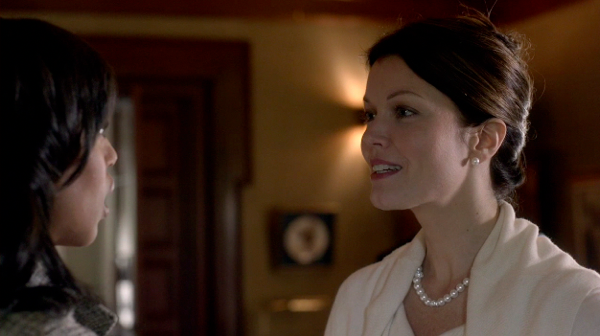
And MOST IMPORTANTLY, will any scene this season top the pure ridiculous hilarity of this scene?:

Read More
Posted in The Good Wife, TV | No comments

Why You Need to Watch Scandal

Posted on 10:41 by Unknown

NewImage

Unlike with many shows, I can actually name the moment I fell in love with Scandal. It's the most comfortably feminist show on television this side of The Good Wife, and one of the tightest, plottiest thrillers in recent memory. But that's not why I fell in love.

Scandal already earned a certain amount of goodwill from me for its African-American female showrunner and African-American female lead (seriously, when's the last time those conditions happened on their own, let alone in tandem).

But goodwill rarely translates to love. Goodwill's the annoying kid sister of love, or that boy who's so nice to you that you really want to like him, who treats you so superficially well that you stay faithful to him for months on end despite flavorless sex and a deep-seated yet ever-increasing disdain for his total obliviousness to how you really feel about him.

Luckily the show quickly surpassed my highest expectations. Scandal has a secret weapon, a character who reminds us in every appearance that this show is something else: Mellie, the President's not-really-suffering wife.

The first episode suitably introduces the show and the characters, but fail to tell us that the show will be anything more than a higher-stakes political simulacrum of Grey's Anatomy. We learn that our protagonist's one true love is the man she can never have (and by this point, really doesn't want to have). It's funny, it's witty, it's thrilling, etc.

Episode Two turns the show into a thriller (and what a magnificent ride it continues to be). Hints of conspiracy abound, and the audience soon realizes that the emotional stakes of our characters stand small against the stakes of the political mystery (and boy does that mystery build. Rhimes works in one of the most horrifying torture scenes I've ever seen. Like most horrors, what goes unseen is far more disturbing than what's seen).

In episode three, Shonda Rhimes mixes in the special sauce. We learn a little more about Olivia Pope (Kerry Washington, whose career's about to explode between this and Django Unchained) and her past relationship with the President. Crucially, a throwaway line, one that whizzes by so quickly that you could easily miss it, reveals that Mellie not only knows about the love affair, but recognizes the role that relationship played in getting her husband elected to the highest office in the land.

NewImage

There's a love triangle alright, but the President doesn't even figure into it: the unifying arc of the show's about Olivia, Mellie, and the Presidency, and the compromises and realignments they make to make sure that the highest office in the land stays intact, and dare I say it, respectable.

This setup allows Shonda Rhimes to wipe her ass with the Bechdel test over and over again. There's a wife and an ex-lover and they don't even talk about relationships. They talk about their roles in the world as they envision it; protecting Fitz, and by extension, their life's work. Their mutual respect and professional need for cooperation, supersede anything so quotidian as stereotypical female jealousy.

Because these woman are comfortable with who they are and what they want, they also have genuine friendships with the opposite sex. Genuinely platonic relationships, without telegraphed sexual tension, still feel sadly revolutionary in contemporary television.

The best thing of all about the show? It's thematic affirmation that in the real world, there are no white hats. No one really lives on the poles of good and evil. I haven't really talked about the other characters of the show, or the ongoing mystery, but I don't want to spoil you (it's twistier than Revenge).

I'm going to start regularly writing about the show, and I hope more of you give it a chance. The first season is streaming on Netflix, and I recommend it for a rainy day.

Read More
Posted in Scandal, Shonda Rhimes, TV | No comments

Wednesday, 26 September 2012

Doctor Who's Power of Three and the Brigadier Problem

Posted on 06:19 by Unknown

NewImage

By now, you've seen (and probably loved, I know I did) The Power of Three. Apart from Darth Vader-Shakri. But I digress!

Disclaimer: I love the Brigadier, but I believe that any sort of love is predicated on recognizing him for who he was, not who he wasn't.

I truly believe that it's a wonderful gesture from Steven Moffat to have a Lethbridge-Stewart in an episode featuring the Doctor stuck on Earth. This is the kind of subtle fanservice that both throws a bone to old fans like me and doesn't interrupt the flow of nu-Who.

So I almost hate to be churlish. Almost. While I liked Kate Stewart as her own character, she never quite rang true as a spawn of that Lethbridge-Stewart (though I freely admit to tearing up at the reveal).

NewImage

NewImage

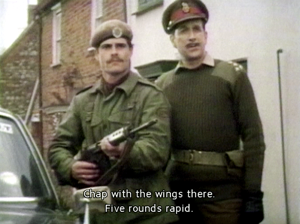
Let's start with a little history. Who is the Brigadier? Just a guest character until the Doctor was stranded on Earth for three seasons, his character existed to problematize the idea of the old-school British hero. You know the type - the manly man saving damsels in distress and pulling out his revolver at every sign of trouble.

They make him full-time as a sort of companion-foil to the Doctor. When he ran UNIT, he and his men were violent thorns in the Doctor's efforts to keep peace in the Universe. (I use the word "men" pointedly. There were no women in his inner circle.). He stands at odds with the Doctors in almost every way, and their relationship remains mostly testy until he retires.

The show made a lot of hay from the Doctor's (and his better companions') tendency to poke fun at the Brig's jingoism, anti-intellectualism, and general sexism. Kate says he valued science. Really, he's a man who only values science insofar as it helps him to kill things more efficiently.

But when it comes to Kate, it's the sexism that's most relevant. Revisionist fans may choose to ignore it, but the Brigadier was pretty much an old-school misogynist. He said something like the following (though this is by far the most egregious) to pretty much every one of the Doctor's female companions, all of whom had to lock him up, throw him out of cars, or generally just run away in order to do their job of being awesome:

BRIGADIER: "Well, you're a young woman. This is a job for my men."
ISOBEL: "Well, of all the bigoted, anti-feminist, cretinous remarks..."
BRIGADIER: "This is no job for a girl like you. Now that's final."

Cue Isobel and Zoe running off and saving the day.

Or my personal favorite, to his wife who's gone off for a joyride with Ace (btw, if there's a better euphemism for "I'm in love with a girl", I don't know what it is):

"But what about supper!"

This clip is a great example of what I mean by his "old-school" sexism. He remains loveable because we know his attitudes are a product of the culture he grew up in. He can't help himself really, and he does better himself in certain respects over time (though never when it comes to women).

Brigadier: Oh, dear. Women. Not really my field.
The Doctor: Don't worry, Brigadier. People will be shooting at you soon.

Nicholas Courtney did a great job of bringing humanity to a character that was already a relic even in the 1970s. I raise his flaws not to say I didn't love him, merely to say that he was flawed.

That said, it's impossible to believe that he even supported Kate having a career, let alone a career at UNIT. She would have had to fight tooth and nail to prove herself, and probably more than once. Someone who grew up that way would not break down at the first sign of trouble. She could not have reached her current title without a whole lot of strong will and self-belief.

But she actually tears up when the cubes become a tiny bit threatening. Maybe we can explain this away by a combination of fear of the invasion and relief that the Doctor's there to help. But I don't know.

I hope she comes back though, nonetheless.


Read More
Posted in Doctor Who | No comments

Sunday, 16 September 2012

Sylvia Plath Annotates the Great Gatsby

Posted on 09:49 by Unknown

Screen shot 2012 09 16 at 12 46 59 PMTwo things I adore in this world are Sylvia Plath and F. Scott Fitzgerald (and Kate Beaton, above*) - I choose the word "things" carefully as both are human ideas shrouded in fairly impenetrable (and self-created) mystique. Both have moments where they maximise the worst clichés about themselves.

The page below, drawn from Sylvia Plath's own copy of The Great Gatsby, (the entire book is available at the University of South Carolina) demonstrates the worst of Sylvia's Plathisms.

NewImage

Reading this, I had a sudden vision of Plath thumbing through classic novels and trolling them, taking long whiffs of Virginia Slims and expelling "Oh, l'ennui" onto countless pages of text that mirror Plath's youthful view of herself as described in The Bell Jar.

*Main image credited to Kate Beaton's magnificent Hark! A Vagrant! I've bought a copy of her book, and so should you.

Read More
Posted in Books, Fitzgerald, Sylvia Plath | No comments

Saturday, 15 September 2012

A Town Called Mercy, Or, The Doctor Grapples with Universal Human Rights

Posted on 15:19 by Unknown

NewImage

A Town Called Mercy may be the finest episode of nu-Who to date.

As in School Reunion, Toby Whithouse takes full advantage of the meta-concept that he Doctor may be the protagonist of this show called Doctor Who, but within the narrative universe, he's really just a minor character. All that business about being The Oncoming Storm really doesn't affect the day-to-day lives of, well, anyone in the universe.

It's an ambitious concept for the show to deal with, which may be why the revived show has previously limited the question to the Doctor's impact on his human (and very mortal) companions.

A Town Called Mercy grapples with a particularly messy issue - is the Doctor really a hero, or is he the intergalactic equivalent of the IMF, an arbiter of "correct behavior" with a worldview and a mission statement that refuses to adapt to cultural differences?

Screen shot 2012 09 15 at 6 14 10 PM

Thankfully, Whithouse doesn't feel the need to answer that question fully - he takes the decisions out of the Doctor's hands. Each of the key players actually make their own choices. Isaac chooses to protect Jex, the Gunslinger has moral heft to guide his own mission, and Jex decides to face his greatest fear - his guilt.

The central moral quandary leads us to one of the most wonderful conversations ever between a Doctor and his companion. Amy finally proves that maybe, just maybe, she actually knows him a little better than everyone else.

I love how their dialogue mirrors a famous scene from Genesis of the Daleks (below). My, how the tables have turned, eh Doctor? (watch clip from :48 to go straight to the scene in question).

The Marvellous Mrs. Pond

Screen shot 2012 09 15 at 6 11 47 PM

Speaking of Amy, the writers have finally figured her out. I wrote last year that she wasn't a character with any clear reason for being, lacking real desires or motivations. But now she feels like a more defined character.

There's two explanations for this:

  1. The writers intended all along that she wouldn't become her own character until she made a life without a Doctor, to make a facile point.
  2. The writers realized that her reactions to having and losing her baby were inadequate and unrealistic, so they've written in hints of severe post-partum trauma. This trauma allows her to be more empathetic, and yes, more ferocious.

Either way, she now feels like a living, breathing human being, instead of a sassy Scottish china doll. She's still clumsy and childish but now we know that these traits are external manifestations of deep-set emotional pain.

So that was long-winded, eh? I'm genuinely excited to see what comes next. Steven Moffat's era finally seems to be living up to its initial promise.

Read More
Posted in Doctor Who | No comments

Wednesday, 5 September 2012

Doctor Who and the Asylum of the Daleks

Posted on 05:40 by Unknown

NewImage

Welcome back! Apologies for lateness, but I just got back from India after a wedding and a funeral, and attached emotions thereof. But onward and geronimo! As always, don't read if you haven't seen it.

Once you get past the supremely irritating Omg!RelationshipTroubles!, Asylum of the Daleks proves to be the strongest outing of the series since the midseason finale last season (the plastic clones, if you recall).

The writers have finally embraced (or at least recognized) the fact that through repetition, they've neutralized any sense of terror that the Daleks once elicited. Really, once an apron-clad Dalek offers you tea, there's no going back. Now they're the "most terrifying creatures in the universe, except when they're working as housemaids, emoting on Broadway (truly, a Dalek attempting an American accent must be the most terrifying thing a viewer can see), and blathering on about Eggs--Eggs--Eggs."

NewImage

For the Daleks to continue to be villains that are even interesting, let alone scary, the writers really need to play around with the concept. Whether they're successful or not's a different matter, but at least they're trying.

The very concept of an asylum for the Daleks never really lived up to its potential (or any real definition, for that matter). It provided a suitably creepy framework for the ultimate Human Dalek (Oswyn-lek), but the setting wasn't developed properly (I assume this is a matter of time. This story could easily have been a two-parter). After all this, I have no idea what it actually means to be an insane Dalek. You turn them on, they start shooting. Same old Eggs-terminators.

But who could help but smile at the references to Classic Who adventures with the Daleks? The City of Exxilons is a particular favorite of mine. Basically, it's the Daleks vs. the insanely creepy Exxilons versus a massive puzzle labyrinth. Also, Sarah has a mullet:

NewImage

NewImage


Business in the front, party in the back. But I digress.

Asylum of the Daleks also provided us with a surprise appearance by Jenna-Louise Coleman, recently announced to be the new companion. While I emitted a heartfelt MEH at the casting of another teenage white girl character, she totally won me over in this episode. That said, she's dead. Who knows what the real companion will be like?

And speaking of dead, why didn't the Doctor try to save Oswyn-lek? Again and again, she proves that she can exert her will over the Dalekness that attempts to control her, even at the end. These aren't the angst-filled self-recriminations of the lone ranger in Dalek, Oswyn-lek is completely, genuinely human, with all the hopes, dreams, laughter and failure of any other non-Dalek being.

I love these little moments that reveal that even the Doctor, with all his worldliness (universliness?) has moments of prejudice that he simply can't put aside. It's these little nuggets that make him seem more human, and the more complicated hero that Moffat has sort of hinted at throughout his era, but has told us about rather than shown.

Tell me, what did you think about the episode? Play along in the comments!

Read More
Posted in Doctor Who, Television, TV | No comments

Tuesday, 4 September 2012

The Devil in Silver, or, Randle McMurphy Grows Up A Little

Posted on 09:30 by Unknown

NewImage

The most enjoyable novels flirt with their weaknesses openly, forcing you to confront their arrhythmias until a) you're Stockholm Syndrome-d into acceptance or b) you cease to notice them, as the mosquito bite turns from a sharp pain to an ongoing itch.

It's been a while since I've read a novel as weirdly imperfect as The Devil in Silver. LaValle's tale of a man stuck in a mental institution (rightly or wrongly, we're never quite sure) pays tribute to its antecedents and builds upon them. He carefully constructs the institution as a real place that we can navigate in our heads, which only adds to our empathetic sense of entrapment.

Unlike one Randle McMurphy, Pepper's not the King of this castle; he's a prisoner in a rundown hospital that feels like a dystopian space station, where visions of sterility become marred by the filthiest barbed wire. It comes as no surprise that here there be monsters.

72 hours more, he repeats, ad infinitum, just 72 hours.

Time passes in strange ways and characters move in and out, though most live on past their brief appearances. Each of Pepper's institution-mates come heartbreakingly to life.they don't exist merely to justify his existence; their hopes and disappointments are real.

And yet. And yet. As I mentioned, LaValle crafts a wire straight to our empathy sensors. But he lacks confidence in his craft. At some point in the novel, he starts to include interludes from news articles on institutional abuses and other horrors. He's unsatisfied with the visceral power of the story, and hits us over the head. Luckily, these interludes are easy to ignore. And even while they leave our heads scratching, they highlight the success of the rest of the novel.

The Devil in Silver's the first novel I've read in some time that makes spending time inside the head of a middle-aged white man seem worth it. It's no coincidence, I'm sure, that Lavalle is only one of those things.

Let me know what you think in the comments.

Read More
Posted in Book Review, Books | No comments
Newer Posts Older Posts Home
Subscribe to: Posts (Atom)

Popular Posts

  • The Good Wife In Review: "Parenting Made Easy"
  • On Kat Dennings being Fat
  • From the Horseless Sulky to Insane Modern Transport
  • Filling the Gaps: Serpico, or, Al Pacino Tries To Find A Fashionable Hat
  • 10 Years of Celebrating 9/11
  • Fashion Designers Sketch Hunger Games Dress
  • Historical Ephemera: The Secret Language of Postage Stamps
  • Poem of the Day: Robert Lax "The Alley Violinist"
  • Catching Up: X-Men: The First Class
  • Breaking Down the Hunger Games Movie Trailer

Categories

  • 2011 (1)
  • 2012 (9)
  • Abandoned (1)
  • Actresses (1)
  • Ads (1)
  • Anne Hathaway (2)
  • Architecture (4)
  • Art (7)
  • Awesome Thing Of The Day (10)
  • Birthday (1)
  • Blog Noir (2)
  • Blogathon (1)
  • blogging (4)
  • Book Review (17)
  • Books (58)
  • Breakfast Round-Up (1)
  • Brooklyn (1)
  • Bucket List (1)
  • Caine Prize (1)
  • City Lights (3)
  • Comics (1)
  • Crimes Against English (1)
  • Daily Inspiration (3)
  • David Lynch (1)
  • Dead Russians (1)
  • Death Penalty (1)
  • DFW (3)
  • Doctor Who (17)
  • Ephemera (15)
  • Epic Fail (1)
  • etc. (19)
  • Fashion (1)
  • Feature (7)
  • Feminism (10)
  • Filling the Gaps (10)
  • Film (29)
  • Film-Tech (2)
  • Fitzgerald (1)
  • Food and Drink (9)
  • Food/Drink (9)
  • Francophilia (1)
  • Friday Five (7)
  • Fringe (2)
  • Gender (2)
  • Graphic Novels (1)
  • Great Fakeout Songs (1)
  • halloween (1)
  • Health (1)
  • History (13)
  • Hit Me With Your Best Shot (1)
  • hope (1)
  • horror (1)
  • Hot Trailer (12)
  • Human Rights (1)
  • Humour (2)
  • Hunger Games (2)
  • Hurricane (1)
  • Infinite Jest (1)
  • Mad Men (3)
  • Magic (1)
  • Manhattan Malaise (1)
  • Mark Twain (1)
  • Media (4)
  • Monday Music (1)
  • Movies (56)
  • Music (21)
  • Music Video (9)
  • mystery (1)
  • New York (6)
  • Nonfiction (1)
  • Olympics (1)
  • Oscarbait 2011 (7)
  • Oscarbait 2012 (2)
  • Parks and Recreation (1)
  • Photography (5)
  • Podcasts (2)
  • Poetry (11)
  • politics (21)
  • Poster (3)
  • QOTD (1)
  • Race (4)
  • Review (8)
  • Reviewing (1)
  • Roosevelt (1)
  • Salute Your Shorts (1)
  • Sandman (9)
  • Scandal (1)
  • Sci-Fi (6)
  • Shonda Rhimes (1)
  • Short Story Book Club (1)
  • Song of the Day (4)
  • Sports (1)
  • Street-View (1)
  • Sylvia Plath (1)
  • Tech (17)
  • Television (50)
  • The Good Wife (21)
  • TV (39)
  • Twitter (2)
  • Urban Design (1)
  • Veronica Mars (1)
  • Videogames (3)
  • Vintage (1)
  • Winona Ryder (1)
  • Woody Allen (4)
  • Writing (5)
  • Year 27 (1)

Blog Archive

  • ▼  2013 (5)
    • ▼  March (2)
      • Charlotte Armstrong and the Case of the Weird Sisters
      • On the Veronica Mars Kickstarter
    • ►  February (1)
    • ►  January (2)
  • ►  2012 (105)
    • ►  December (6)
    • ►  November (9)
    • ►  October (7)
    • ►  September (5)
    • ►  August (4)
    • ►  July (12)
    • ►  June (7)
    • ►  May (12)
    • ►  April (8)
    • ►  March (13)
    • ►  February (6)
    • ►  January (16)
  • ►  2011 (190)
    • ►  December (32)
    • ►  November (31)
    • ►  October (40)
    • ►  September (36)
    • ►  August (33)
    • ►  July (18)
Powered by Blogger.

About Me

Unknown
View my complete profile